
A Statement from William M. Plater
Antioch University Board of Governors, 2015-2025
The Coalition for the Common Good (CCG) recently published an account of its formation and governance structure that is legally framed but incomplete. I served on the Antioch University Board of Governors when the Coalition was conceived, negotiated, and approved.
In fact, at an early Antioch Board meeting, one of several where we were considering options in the national context of challenges facing smaller institutions, consultants proposed mergers, acquisitions, and other now familiar arrangements for “survival,” but few options for flourishing. Instead, I proposed, “let’s form the ‘Justice League’ (appropriating the name of a movie franchise) to bring together other universities with a strong commitment to social justice and find a way to share resources and mission through collaboration—but doubling down on our distinctive mission within the range of university goals and purposes.”
It was not a plan, but it was the seed of an idea—one that Antioch Governors began to pursue with far more pragmatism than my spontaneous urging that Antioch once again take a new approach to higher education. I make this point solely to indicate that what became the Coalition for the Common Good was entirely Antioch’s inspiration, developed over explorations with many other institutions that might want to work together without merger or acquisition. Otterbein was not the first institution we invited to consider an affiliation, and it certainly was not intended to be the last.
From the outset of these exploration, Antioch was not considering merger or acquisition. I believe it is thus essential to state plainly what the Antioch Board understood it was agreeing to—and what it most assuredly was not.
I offer this statement as a former Board member speaking from personal recollection. I am not a lawyer and do not presume to resolve the issues now before the court. But I participated in the Board’s deliberations, and I can speak directly to the intent and assurances that informed my vote. I would also note, as context for my statement, that for 19 years I was the chief academic officer of the nation’s largest, most substantive, and long-lasting partnership between two universities, Indiana University and Purdue University, separate universities that collaborated to offer joint but separate degree programs of the respective universities through IUPUI (Indiana University Purdue University Indianapolis), a partnership that itself was only recently dissolved to create separate institutions in Indianapolis but that flourished for over 50 years through arrangements not unlike those underlying CCG—based on trust, respect, reciprocity, mutual benefit, and a commitment to serving the students who attended. IUPUI would never have survived relying on written agreements—it depended on the goodwill, trust, and shared values of the people involved to make it work.
Antioch did not enter the Coalition to surrender its institutional autonomy.
The CCG says that the corporation known as Antioch University became the Coalition for the Common Good and that Antioch as an educational provider continued as an operating division within it. That may describe the legal mechanism used to launch the Coalition. It does not describe the institutional bargain approved by the Antioch Board.
We were told by lawyers and others that using Antioch’s existing corporate structure was an expedient, temporary and transitional arrangement, necessary to proceed to a timely agreement that would address operational as well as our aspirational goals. Creating an entirely new entity would have delayed the Coalition while it developed an independent financial history and audited statements of at least two years, which we were advised would be necessary to establish a neutral overarching legal entity to be the host of the collaborating institutions.
It must be understood that from the outset, what became the CCG was envisioned to include several institutions—not only the founding members. Antioch’s legal structure was used so the work could begin quickly—not so Antioch could be permanently subordinated within the organization it helped create (and in my view originated by offering Otterbein an opportunity to join in its creation). I, and I believe every other governor who approved the arrangement, understood that as soon as the CCG had two years of its own financial records, some shared services, and—ideally—had attracted additional members, the CCG would become its own separate entity distinct from Antioch, and we would participate with other member institutions in evolving the governance structure and bylaws to a form that allowed co-equal, independent universities to work together with shared services, collaborative programming, and enhanced fundraising opportunities for a shared social justice mission. The mission was understood as the overriding purpose for forming what became the CCG as a functional academic “Justice league,” even as Antioch sought a practical way to ensure its financial future through expanded programming, enrollment growth, and shared services.
The temporary mechanism was never understood to erase Antioch’s identity or permit the CCG Board to eliminate Antioch’s governing voice when disagreement arose. The board members who approved the legal agreement understood unambiguously that our autonomy was protected for the interim period by sufficient safeguards through delegated responsibilities to the Antioch Board of Governors and the Antioch Standing Committee of the CCG to ensure our autonomy, separate accreditation, and responsibility for all academic matters—which are, by common understanding in the higher education community, fiduciary—as expected by the Higher Learning Commission’s approval of the arrangement. (Of relevance, I was a six-year Commissioner of the Senior College Commission of the Western Association of Schools and Colleges and thus had a full understanding of the regulatory conditions that had to be met for Antioch to retain its separate accreditation by the Higher Learning Commission.)
From the outset, several individual governors, me included, objected to the term “advisory” being attached to the Antioch Board since our fiduciary responsibilities for academic matters were absolute, not advisory. We were “assured” that this could be fixed and that “everyone” understood that the Antioch Board of Governors had actual final authority over its specified and defined responsibilities and that this “advisory” label would be removed once the structure was revised after two years of audited financials and/or new members were added to the CCG.
The August 28, 2026, CCG action exposes how far the CCG has departed from that understanding. Eliminating Antioch’s Board cannot credibly be described as “simplifying” governance. It is a wholesale transfer of power: dissolving the body charged with protecting Antioch, assuming control over its assets and institutional functions, and leaving a 174-year-old university without an independent governing voice precisely when that voice is questioning Coalition leadership, financial practices, and adherence to the founding vision. It is nothing less than a betrayal of the founding principles of collaboration, shared mission, co-equal partnership.
The CCG says this action would improve decision-making and help Antioch move forward. According to whom? The six CCG Directors who voted on it? This group of directors cannot legally convert the attempted takeover of a university into an administrative improvement merely by voting for it. If Antioch’s Board can be abolished for exercising its authorized independent judgment, then the autonomy we were promised was never autonomy at all— and clearly an act of deception perpetrated on members of Antioch’s board who in good faith agreed to an agreement we understood ensured Antioch’s autonomy.
The word ‘advisory’ needs to be clearly understood in the Antioch Boards’ reluctant acceptance of the term
As I have already noted, when the final agreement designated the continuing Antioch body as the Antioch “Advisory” Board, several Board members—including me—objected strongly. We were explicitly assured that the Board would retain meaningful responsibility for Antioch’s academic integrity, finances, leadership, mission, and operations, including reserved powers that the CCG could not simply disregard. We also understood that the troubling terminology would be revisited as soon as two years had passed, a new member was added, or even earlier. There was extensive discussion of the meaning of the term “fiduciary,” including the ways higher education authorities such as the Association of Governing Boards, define a board’s fiduciary responsibilities to include much more than financial management, essential as that one aspect of fiduciary duties may be. It is my assumption that the Higher Learning Commission understood this as a condition of its approval of the arrangement, since Antioch retained separate accreditation recognition from the Commission.
We proceeded because we trusted those assurances and believed the arrangement was a step toward a coalition of equals. If anything, our biggest error was believing in the word of our co-founding colleagues and the advice of counsel—or at least our understanding of 4 that advice. Had I understood that the CCG Board would later seize upon the word ‘advisory’ to dissolve Antioch’s Board, reclaim its authority, control its assets, and assume its institutional functions, I would never have voted for the agreement. I do not believe the Board as then constituted would have approved it.
The Coalition’s design confirms this understanding. The CCG Board included four representatives associated with Antioch, four associated with Otterbein, and one jointly selected independent member to preserve institutional balance. We expected the Coalition eventually to be led by an independent chief executive, not permanently by the sitting president of one of the member institutions. Otterbein’s president serving initially as CCG president was accepted only as a short-term accommodation, not as the ongoing concentration of coalition and institutional authority in one person and in deference to Otterbein’s financial contribution—although it was understood that Antioch would also be making a contribution in services provided to the CCG without a specific dollar equivalency.
As architects of the original concept, we knew that the Coalition would need to attract new members not only to thrive but to survive. From day one, it was understood that a powerful idea like a “justice league” would not be enough to succeed. It would need additional members with additional net new strengths in degree programs, locations, staff, and resources for it to achieve its goal of being a force for good in society.
Antioch expected that the search for new members would begin immediately and would work diligently to attract at least one new member within a year or two. A joint task force was formed, on which I served as the Antioch governor representative, and I would say by my personal estimation that that effort was driven largely by Antioch participants’ commitment.
The novel model we approved has remained a two-member structure and the search efforts failed despite the task force’s identifying several potential candidates. Worse yet, it now reflects an effort by one side to control the other. No independently governed institution would willingly join a coalition in which its governing authority could be withdrawn whenever it challenged coalition leadership.
The CCG’s reliance on Otterbein’s reported $5 million investment does not justify what occurred. Antioch would never, by any stretch of the imagination, agree to be acquired, taken over, merged, or dissolved for a mere $5 million. Antioch generates approximately $80 million annually in tuition revenue. It did not sell its identity, assets, accreditation, or governing authority to Otterbein for $5 million. The investment fund was exactly that—a pool of money to launch the programs OU transferred to AU—for the mutual benefit of both Antioch and Otterbein with a shared revenue stream from new tuition, and establishing the precedent for future collaborations with new member institutions.
The transferred programs were expected to generate enough revenue for both the institutions to benefit. As was clearly documented by Antioch from the outset, however, the tuition revenue would not cover the costs of offering the programs for at least several years, until student recruitment could begin in earnest, program level accreditations could 5 be secured, expert faculty put in place, and operational arrangements made for administrative and geographic implementation.
Hence, any claims that the CCG is now making about “new revenue” or operational savings must be tested through a complete and transparent accounting of gross revenue, associated expenses, institutional contributions, allocation methods, net benefit—and above all, phased implementation of credible, quality programs reflecting the goals and integrity of the new Coalition. But even substantial financial benefit could not be justified to authorize one coalition member to extinguish another’s governance.
Nor can the CCG reconcile its actions with its professed respect for Antioch’s mission and tradition of shared governance. Shared governance means more than allowing faculty to develop curricula. It requires a governing structure capable of protecting the University’s mission, academic integrity, leadership, financial resources, accreditation responsibilities, and long-term interests, including reputation. The CCG’s expressions of support for Antioch rings hollow when paired with a claimed right to eliminate AU’s Board, centralize control in its own body, access AU’s bank account, and terminate AU’s president.
Furthermore, the CCG’s unilateral actions reveal both a lack of understanding of and contempt for Antioch’s historic culture of faculty engagement and involvement. As any person even remotely familiar with mergers and consolidations knows, success depends on cultural alignment (as many of the recent failed mergers demonstrate). Antioch’s engagement with Otterbein depended on a cultural alignment, and at the faculty and staff level we believed this to be genuine before proceeding with legal formulation. However, the CCG board’s actions suggest that cultural alignment is not a relevant, if not essential, condition for success. If the CCG calls its actions “support,” I shudder to think what it might consider constraint or even deterrence.
The court will answer the legal questions. From my perspective, however, the important question of trust has already been answered—as has the real commitment of one of the parties to the idea, the concept of working together for common purpose. I do not believe that Antioch could reasonably be expected to maintain a relationship the CCG itself has made untenable. The parties should now negotiate Antioch’s prompt, orderly, and equitable separation from the Coalition—protecting students, employees, academic programs, accreditation, assets, and legitimate financial obligations of both institutions while minimizing further disruption and expense and protecting student interests.
I cannot responsibly suggest what a separation agreement might entail, and to the extent that Otterbein has made some or all of its financial commitment and to the extent that Antioch has provided services and the engagement of its staff for the benefit of the CCG, these matters should be fairly accounted and the parties adequately compensated for their respective contributions. It is my hope that the programmatic collaborations , once begun by the participating faculty, staff, and students, be continued—now as partners and not as litigants for the benefits of the students they seek to serve. Despite the actions of the CCG board members, my respect for the faculty, staff, and students of Otterbein 6 remains intact and I wish for them to suffer no harm for actions over which they had no control.
Antioch is an innovative university. Over the decades, it has tested bold ideas; many succeeded; some, like this one, did not. There is no shame in attempting something ambitious and later discovering that it does not work, especially now, when American higher education as a sector, is in the midst of enormous, perhaps unprecedented, challenges. The shame lies in abandoning the commitments on which the experiment was built, acting contrary to the model’s professed values, and attempting unilateral control in what could only survive and succeed as a coalition of equals committed to each other’s success in service to a shared mission. It is time to dissolve this failed attempt and try again in some new approach to working together.
Respectfully submitted,
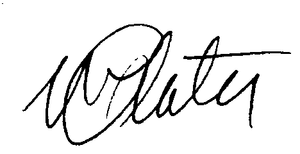
William M. Plater, PhD, DHL (hon.), DPA (hon.)
Member, Antioch University Board of Governors (2015-2025)
Executive Vice Chancellor and Dean of the Faculties Emeritus (1987-2006) and
Chancellor’s Professor Emeritus of Public Policy, Philanthropic Studies, and English (1983- 2010) Indiana University Indianapolis (formerly IUPUI)