
What We're Protecting
Glover's Ledge
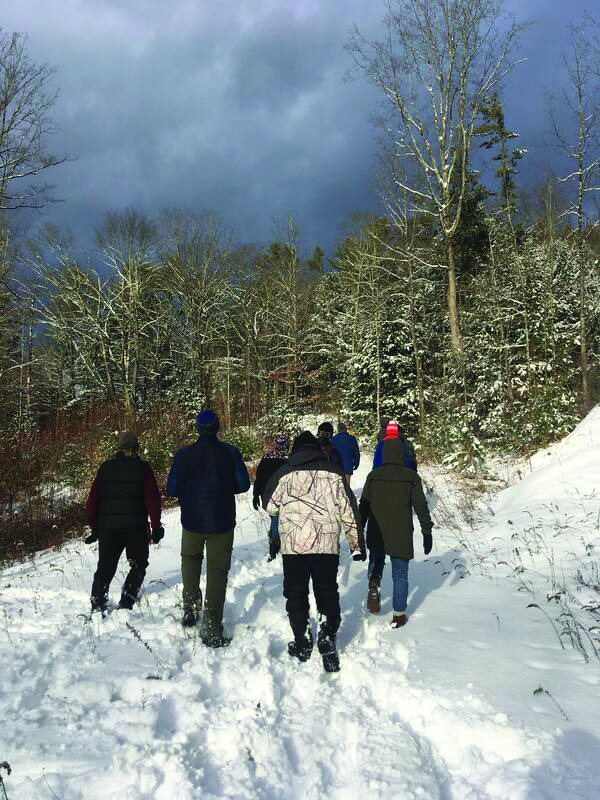
At Antioch, environmental education does not remain confined to the classroom. Students enter forests, study living systems, gather evidence, test ideas, and consider how people can become better stewards of the places they inhabit.
At Glover’s Ledge, that work takes root across 81 acres of forest and wildlife habitat in New Hampshire. The property serves as a place for applied research, experiential learning, conservation, and community engagement. Its solar array and solar-powered outdoor classroom also give students opportunities to study renewable energy and climate-related questions through direct experience.
This is the Antioch approach: connect knowledge with practice. Study systems in their full complexity. Understand that environmental questions are also human questions involving access, responsibility, resources, and justice.
A $1.5 million gift received in 2026 is helping this work grow. One million dollars is expanding the Tom Wessels Environmental Scholarship, creating greater access for graduate students pursuing environmental studies grounded in justice, systems thinking, and applied research. The remaining $500,000 established the Peter Palmiotto Conservation Fund, supporting both student learning and the long-term care of the land.
The impact extends beyond the property itself. Glover’s Ledge creates opportunities for students, faculty, local schools, and community members to learn from one another and the natural world. Future plans envision an even greater role for the property as a center for wildlife and forest education.
Glover’s Ledge demonstrates what Antioch’s mission looks like in practice. It joins personal learning with community responsibility. It transforms education into stewardship. It asks students not only to understand environmental challenges, but to help address them.
Antioch’s autonomy allows us to make long-term commitments to places, people, and forms of learning that do not fit neatly within conventional academic boundaries. Protecting that independence means preserving our ability to teach in ways that are responsive, experiential, and connected to the world our students are preparing to change.
This is how we keep Antioch, Antioch: by giving people the knowledge, experience, and opportunity to care for what comes next.